

C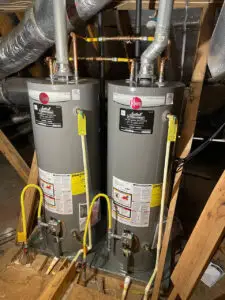 hoosing between a tankless and a traditional water heater is one of the biggest home plumbing decisions you’ll make. And in Houston, with our heat, humidity, household sizes, and water usage habits, the right answer isn’t always obvious. Santhoff Plumbing has installed both types throughout the Houston metro area for decades, and we’re here to give you a straightforward comparison.
How Each System Works
Traditional Tank Water Heater
A conventional water heater holds 30–80 gallons of pre-heated water in an insulated tank. The burner (gas) or heating element (electric) cycles on and off to maintain water temperature 24/7, even when you’re not using hot water. When you turn on the hot tap, water flows from the tank.
Tankless Water Heater
Also called on-demand water heaters, tankless units heat water instantaneously as it flows through the unit — there is no storage tank. When you open a hot tap, cold water runs through a heat exchanger that rapidly brings it to temperature. The unit shuts off entirely when no hot water is needed.
Efficiency: Tankless Wins — But by How Much?
In Houston’s climate, a tankless water heater typically offers 20–35% greater energy efficiency compared to a tank unit. You’re not paying to keep 50 gallons of water hot around the clock. For a typical Houston family of four, this can translate to $100–$200 per year in energy savings.
However, the higher upfront cost of a tankless unit — typically $1,500–$3,500 installed versus $700–$1,500 for a traditional unit — means the payback period is generally 5–10 years.
Hot Water Supply: Traditional Has the Edge for Large Households
A tankless unit heats water on demand, but it has a maximum flow rate — typically 2–5 gallons per minute for a whole-home unit. If your Houston household runs a shower, the dishwasher, and a washing machine simultaneously, a single entry-level tankless unit can struggle to keep up.
A traditional 50-gallon tank provides a large reserve that handles simultaneous demand easily. For large Houston families with heavy simultaneous hot water use, a traditional unit or multiple tankless units may be the better approach.
Lifespan: Tankless Wins Long-Term
Traditional tank water heaters last 8–12 years. Tankless water heaters typically last 15–25 years with proper maintenance — more than double. Over a 20-year period, you’ll likely replace a tank unit at least once, which factors into the true cost comparison.
Houston-Specific Considerations
- Gas is preferred: Houston’s favorable natural gas prices make gas-powered units — both tank and tankless — the most economical choice for most homes.
- Hard water: Houston’s moderately hard water can cause mineral buildup in tankless heat exchangers. Annual descaling is important for tankless unit longevity in this area.
- Freeze risk: During rare Houston freezes, exposed outdoor tankless units require freeze protection. Most modern units have built-in protection, but it’s worth confirming during installation.
- Older homes: Homes with outdated gas lines or electrical panels may require upgrades to accommodate a tankless unit, adding to installation cost.
Our Recommendation
For most Houston households of 1–3 people with moderate hot water demand: tankless is the better long-term investment. For large families or homes with high simultaneous demand: a high-capacity traditional tank or a whole-home tankless system with two units is worth the investment.
The best way to decide is to have a Santhoff plumber evaluate your home’s gas line capacity, current usage patterns, and household size. We install and service all major brands of water heaters in Houston and offer financing for qualifying projects.
Frequently Asked Questions
How much does tankless water heater installation cost in Houston?
Tankless water heater installation in Houston typically ranges from $1,500 to $3,500 depending on the unit size, gas line requirements, and whether venting upgrades are needed. Santhoff provides a full quote before work begins.
Do tankless water heaters work during a Houston power outage?
Most gas tankless water heaters require a small amount of electricity to operate the electronic ignition and controls. During a power outage, they will not function without a generator. Traditional tank heaters with a standing pilot light can provide hot water during outages.
How often does a tankless water heater need maintenance in Houston?
In Houston’s moderately hard water environment, tankless water heaters should be flushed and descaled annually to prevent mineral buildup in the heat exchanger. This is a quick service that Santhoff Plumbing can perform during a routine maintenance visit.
Can I convert my existing tank water heater to tankless?
Yes, but it requires gas line upgrades (tankless units draw more BTUs) and new venting. A Santhoff plumber can assess your home’s suitability during a free estimate.