

Quick Answer: Houston water averages 10–15+ grains per gallon: solidly hard. Dissolved calcium and magnesium bake into scale inside your water heater and fixtures, stealing efficiency, shortening tank life, and clogging faucets and valves. A water softener or treatment system stops the damage at the source.
Why This Matters for Every Houston Home
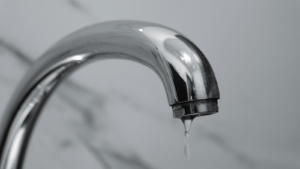 Hard water rarely announces itself. There is no burst pipe, no flooded floor, just a slow, invisible tax on every appliance and fixture that touches water. By the time you notice the symptoms, scale has already shaved years off your water heater and stiffened the valves behind your walls.
What makes this worth your attention is the math. Hard water does not break things on day one; it makes everything wear out faster and run less efficiently, quietly raising your energy bills and your replacement costs at the same time. Across a whole house, over a decade, that adds up to real money, spent without ever seeing the cause.
What “Hard Water” Actually Is
Water hardness is a measure of dissolved minerals, mainly calcium and magnesium, expressed in grains per gallon (gpg). Anything above about 7 gpg is considered hard. Much of the Houston area lands between 10 and 15+ gpg, and some supplies test higher. That mineral load is harmless to drink, but it does not stay dissolved forever. Heat it or evaporate it, and the minerals precipitate out as hard, chalky scale; the white crust on your showerhead is the same deposit forming where you cannot see it.
How Hard Water Wrecks a Water Heater
Your water heater takes the worst of it, because heat is exactly what drives minerals out of solution.
- Sediment at the bottom. In a tank heater, scale settles into a layer on the tank floor, directly over the burner. That layer insulates the water from the heat, so the burner runs longer to do the same job; you pay more for slower hot water.
- Overheating and noise. Trapped water under the sediment boils and pops. The rumbling or popping you hear is from an aging tank, stressing the steel and the glass lining.
- A spent anode rod. Hard water accelerates the sacrificial anode’s job of corroding so the tank does not. Once it is gone, the tank itself starts to rust.
- Tankless units are especially vulnerable. A tankless water heater forces water through a narrow heat exchanger; scale builds there fast and can choke flow or trip error codes. Most manufacturers require regular descaling to keep the warranty valid.
A real-world example: a six-year-old tank that should have a decade of life left starts running out of hot water early and rumbling at night. There is nothing wrong with the burner; it is buried under an inch of Houston scale.
How Hard Water Wrecks Fixtures and Appliances
- Faucets and aerators clog with mineral buildup, cutting flow and dripping early.
- Shower valves and cartridges stiffen and stick as scale builds in tight tolerances.
- Toilets develop mineral rings and sluggish fill valves.
- Dishwashers and washing machines scale internally and need more detergent to fight the minerals.
- Glass, tile, and chrome wear a permanent cloudy film that no amount of scrubbing fully removes.
Common Mistakes and Real Risks
- Treating symptoms forever. Replacing scaled aerators and cloudy fixtures while ignoring the cause means buying the same parts again in a year.
- Skipping the tankless flush. Owners often do not know their tankless unit needs descaling. Skip it and you risk both performance loss and a voided warranty, an expensive surprise.
- Sizing a softener wrong. An undersized or misconfigured system fails to keep up or wastes salt and water. Matching capacity to your household’s hardness and usage is what makes a softener actually work.
- DIY descaling with the wrong chemicals. Harsh acids can damage seals, finishes, and tank linings. Done wrong, a descale can cost more than the scale would have.
Softener vs. Conditioner vs. Whole-Home Filtration
These three are not interchangeable, and choosing the wrong one wastes money.
- Salt-based softener. Removes calcium and magnesium through ion exchange, the most effective fix for true hardness and scale. When to use it: when scale on heaters and fixtures is your main problem.
- Salt-free conditioner. Does not remove minerals but alters them so they cling less. When to use it: households that want reduced scaling without adding sodium or maintaining salt, accepting somewhat less protection.
- Whole-home filtration. Targets chlorine, sediment, taste, and odor, not hardness. When to use it: alongside a softener for water quality, not as a substitute for it.
The right answer often combines a water treatment system for hardness with whole-home water filtration for everything else, sized to your home after a hardness test, not guessed at.
The Costs You Never See on a Bill
Beyond the water heater and the visible fixtures, hard water drains your budget in places no line item ever names.
Inside your supply pipes. Scale does not only build in heaters, but it also lines the inside of your hot-water pipes too, narrowing them over the years the way plaque narrows an artery. Flow drops, pressure suffers, and eventually a section can choke enough to need replacement. It is a slow process, which is exactly why it goes unnoticed until a shower runs weak for no clear reason.
In the laundry room and the shower. Hard water fights soap. You use more detergent, more shampoo, and more dish soap to get the same result, and fabrics wear out faster as mineral deposits stiffen them. Many Houstonians blame their skin or their shower for that filmy, never-quite-clean feeling; it is the minerals refusing to rinse away.
In everyday efficiency. Because scale insulates heating elements and burners, a scaled water heater burns more gas or electricity to deliver the same hot water. That waste never shows up as a repair; it hides inside a slightly higher utility bill, month after month, for the life of the appliance.
No single one of these is dramatic. Added together, across years, they are the real price of leaving Houston’s hard water untreated.
What Happens If You Do Nothing and How to Prevent It
Untreated, hard water shortens a water heater’s life by years, stiffens valves until they fail, and films every fixture in the house. Prevention is straightforward: treat the water at the source, and maintain the equipment you have. A tank heater benefits from an annual flush to clear sediment; a tankless unit needs periodic descaling. If a heater is already struggling, water heater repair can address scale damage, and a scaled-out unit at end of life is a candidate for new water heater installation, ideally protected from day one by a softener. Folding these into routine plumbing maintenance is the cheapest insurance there is.
Why Choose Santhoff Plumbing
Houston homeowners have trusted Santhoff Plumbing with problems exactly like this for decades. Here is what that means for you.
- Experience since 1974. More than 50 years in Houston and over 200 years of combined crew experience, we have seen how this city’s soil, water, and storms wear on a plumbing system, and we fix the cause, not just the symptom.
- Reliability you can call at 2 a.m. We are a Veteran-owned, family-operated company with a 4.9-star rating across 840+ Google reviews, upfront pricing, and a 24/7 emergency plumber on standby every day of the year.
- Quality and technology. Licensed Master Plumbers using camera inspections, electronic leak detection, and modern materials, backed by a satisfaction guarantee and warranties through our Santhoff Family Club.
- Service area and coverage. We cover Greater Houston end to end: the Heights, Montrose, River Oaks, West University, Bellaire, Memorial, Katy, and beyond. See the full areas we serve.
Call (713) 665-4997 or contact us online to schedule service. Financing is available on qualifying work.
Frequently Asked Questions
How do I know if my Houston home has hard water?
Look for the tells: white scale on showerheads and faucets, cloudy glassware, soap that will not lather, and a water heater that rumbles or runs out early. A simple hardness test confirms the grains-per-gallon level so any treatment can be sized correctly.
Does a water softener make water unsafe to drink?
No. A salt-based softener adds a small amount of sodium during ion exchange, minor for most people. Those on strict sodium restriction can pair the softener with a drinking-water filter or use a salt-free conditioner. The water remains safe.
Will softening my water extend my water heater’s life?
Yes, significantly. Removing calcium and magnesium prevents the sediment layer that insulates the burner and the scale that chokes a tankless heat exchanger. Combined with regular flushing, treated water can add years to a heater and keep it running at full efficiency.
How often should a tankless water heater be descaled in Houston?
With Houston’s hardness, roughly once a year is typical, and your manufacturer may require it to keep the warranty valid. A water softener stretches that interval considerably. When in doubt, follow the manufacturer’s schedule; skipping it is a common and costly mistake.