

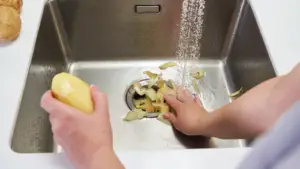
 A garbage disposal is one of the most convenient appliances in a Houston kitchen — and one of the most abused. When used correctly, a quality disposal lasts 10–15 years and handles kitchen waste efficiently. When misused, it becomes a frequent source of drain clogs, foul odors, and calls to the plumber. Here’s the definitive guide from Santhoff Plumbing.
DO: What You CAN Put Down Your Garbage Disposal
- Soft food scraps — most vegetable trimmings, fruit, cooked foods
- Small bones — fish bones and small chicken bones actually help clean the disposal’s grinding components
- Ice cubes — regular use of ice cubes cleans the grinding ring and sharpens the impellers
- Citrus peels — lemon or lime peels clean and deodorize the disposal naturally
- Dish soap and cold water — run cold water and a few drops of dish soap after each use to flush the drain line
DON’T: What You CANNOT Put Down Your Disposal
Grease, Fat, and Oil
This is the number one cause of garbage disposal drain clogs in Houston. Grease and fat are liquid when warm but solidify as they cool in your drain pipes, building up over time until flow is completely blocked. Pour grease into a container and dispose of it in the trash.
Fibrous or Stringy Vegetables
Celery, asparagus, artichokes, corn husks, and similar fibrous foods wrap around the disposal’s impeller and motor shaft, causing jams and motor burnout.
Starchy Foods
Pasta, rice, potato peels, and bread expand with water and form a thick paste that clings to drain lines and creates stubborn clogs.
Coffee Grounds
A common misconception is that coffee grounds deodorize disposals. In reality, grounds accumulate in the drain trap and create a thick sludge that restricts flow.
Eggshells
The membrane inside an eggshell can wrap around the impellers, and the ground shell creates a sand-like granular residue in drain lines.
Hard Items
Bones from beef or pork, fruit pits, and hard seeds can damage or crack the grinding components.
Non-Food Items
Never put glass, plastic, paper, rubber, or metal items into the disposal. This seems obvious, but utensils, jar lids, and rubber bands regularly end up causing damage.
Best Practices for Disposal Maintenance
- Always run cold water before, during, and for 30 seconds after using the disposal
- Run the disposal regularly — even when not needed — to prevent rust and corrosion
- Clean monthly with ice cubes and rock salt to remove buildup
- Deodorize monthly with citrus peels or a baking soda/vinegar treatment
When to Call Santhoff Plumbing for Garbage Disposal Repair
If your disposal hums but won’t grind, won’t turn on at all (check the reset button on the bottom of the unit first), leaks from beneath the sink, or produces persistent odors despite cleaning, it may be time for professional service or replacement. Santhoff Plumbing handles garbage disposal repair and installation throughout Houston.
Frequently Asked Questions
How long should a garbage disposal last in Houston?
Quality garbage disposals last 10–15 years with proper use. InSinkErator and Moen are the most reliable brands in our experience. Frequent misuse can shorten lifespan to 5–7 years.
What is the reset button on my garbage disposal?
The small red or black button on the bottom of the disposal unit is a thermal overload reset. If the disposal overheats or jams, it trips the reset. Press it firmly after clearing any jam to restore operation.
How do I fix a jammed garbage disposal?
Insert the hex (Allen) key wrench into the port on the bottom of the unit and work it back and forth to free the impeller. Then use disposal tongs (never your hand) to remove the obstruction from inside the unit. Press the reset button and test.
Should I replace or repair my garbage disposal?
If your disposal is more than 10 years old or requires a major motor repair, replacement is almost always more cost-effective than repair. Santhoff Plumbing can assess your unit and recommend the best path.