

 If you’re buying an older Houston home, dealing with recurring sewer or drain issues, or planning a major renovation, hydrostatic testing is a diagnostic tool that can save you from a very expensive surprise. This pressure test checks the integrity of your home’s drain system — the pipes that carry waste from your fixtures to the sewer main — for cracks, holes, and joint separations that aren’t visible from inside the home.
What Is Hydrostatic Testing?
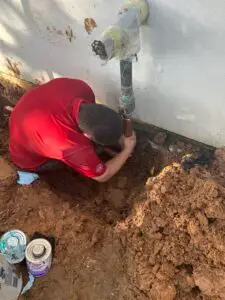
A hydrostatic pressure test works by temporarily plugging the sewer line at the main cleanout, filling the entire underground drain system with water, and monitoring whether the water level holds over a period of time. If the water level drops, water is escaping through a crack, hole, or failed joint somewhere in the drain system beneath the slab.
This test is specifically designed to identify failures that can’t be seen with a sewer camera alone — hairline cracks and porous sections in older cast iron or clay tile drain pipes are sometimes invisible to a camera but clearly evidenced by a hydrostatic test.
Who Should Get a Hydrostatic Test in Houston?
- Home buyers — especially for Houston homes built before 1985 with original cast iron drain lines
- Homeowners with chronic drain issues — if you’re having recurring slow drains or unexplained moisture, a hydrostatic test can confirm whether the drain system is intact
- Anyone planning a major remodel — before investing in a bathroom or kitchen renovation, confirm the drain system below is sound
- Homeowners with known slab leaks — a hydrostatic test after slab leak repair confirms the drain system wasn’t damaged
- Pre-sale preparation — many Houston real estate transactions now include hydrostatic testing as a buyer contingency
Houston’s Soil and Why This Test Matters More Here
As discussed in earlier posts on slab leaks and sewer line damage, Houston’s expansive clay soil is uniquely hard on underground plumbing. The constant soil movement that cracks and shifts supply lines does the same to drain lines, and drain line damage develops slowly and silently until it becomes a significant problem. Hydrostatic testing is the most reliable way to get a complete picture of your drain system’s condition.
What Happens If the Test Fails?
If a hydrostatic test reveals that the drain system is losing water, the next step is a sewer camera inspection to identify the location and nature of the failure. Repair options include trenchless pipe lining, spot repairs, or sewer line replacement depending on the extent of the damage.
Santhoff Plumbing offers hydrostatic testing throughout the Houston area, including Sugar Land, Missouri City, and surrounding suburbs. Our plumbers provide a complete written report of the test results for your records.
Frequently Asked Questions
How much does hydrostatic testing cost in Houston?
Hydrostatic testing in Houston typically runs $200–$350. For buyers and sellers, this is an extremely cost-effective diagnostic compared to discovering a failed drain system after closing.
How long does a hydrostatic test take?
The test itself takes approximately 1–2 hours, 30 minutes to set up and pressurize the system, then an observation period of 30–60 minutes to monitor for pressure loss.
Is hydrostatic testing required in Houston?
It is not required for all homes, but it is commonly requested by buyers and lenders for homes with older plumbing systems, known drainage issues, or in areas with significant soil movement history.
Can I stay in my home during hydrostatic testing?
Yes. The test is non-invasive and doesn’t require access to the home’s interior beyond the sewer cleanout. You can continue normal activities while the test is being conducted.