

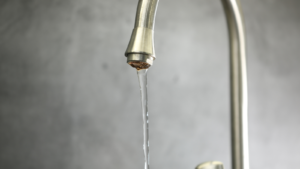
 Low water pressure is one of the most frustrating plumbing problems Houston homeowners deal with — and Bellaire and West University Place residents experience it more than most. These neighborhoods feature some of Houston’s oldest residential plumbing, with many homes still running on original galvanized steel supply lines installed in the 1950s and 60s. But age isn’t the only factor. Here’s what could be causing your pressure problem.
Common Causes of Low Water Pressure in Bellaire and West U
1. Corroded or Scaled Galvanized Pipes
Galvanized steel pipes corrode from the inside out over time. As corrosion and mineral scale accumulate, the interior diameter of the pipe shrinks — sometimes to less than 25% of its original size. The result is dramatically reduced flow at every fixture. This is the most common cause of whole-house low pressure in Bellaire and West U homes built before 1970.
2. Failing Pressure Regulator
Houston’s municipal water supply is delivered at relatively high pressure (60–80 PSI). A pressure reducing valve (PRV) steps this down to a household-friendly 40–60 PSI. PRVs are typically located near the main water shutoff and have a service life of 10–15 years. A failing PRV can cause either low pressure (undershooting target pressure) or erratically high pressure that damages fixtures.
3. Partially Closed Shutoff Valves
If your main shutoff or secondary shutoff valves are not fully open — perhaps after a recent plumbing repair — they can significantly restrict flow. Check that all shutoff valves are fully open (parallel to the pipe for ball valves; fully counterclockwise for gate valves).
4. Undersized Water Lines
Some older Bellaire and West U homes were built with ½-inch supply lines as the main run — which was adequate for the fixture counts of that era but undersized for modern households with multiple bathrooms, appliances, and outdoor irrigation.
5. Municipal Pressure Issues
Occasionally, Houston Water reduces main line pressure during peak usage periods or infrastructure maintenance. If your pressure problem is intermittent and affects multiple neighbors, the issue may be on the municipal side. Contact Houston Water to check for service advisories.
6. Leak in the Main Supply Line
A leak in your main supply line between the meter and the house bleeds off pressure before it ever reaches your fixtures. Signs include a water meter that continues to move when all water is off inside the house, and unexplained wet spots in the yard near the water main route.
How Santhoff Diagnoses and Fixes Pressure Problems
Our licensed plumbers start with a pressure gauge reading at the main and at fixtures to quantify the problem and narrow down its location in the system. From there, we identify whether the issue is a failing PRV, corroded pipes, a leak, or an undersized supply configuration. We provide a written assessment and repair options with transparent pricing before any work begins.
Frequently Asked Questions
What is normal water pressure for a Houston home?
Normal household water pressure is 40–80 PSI. Below 40 PSI is considered low; above 80 PSI puts stress on fixtures, appliances, and pipe joints.
Can I adjust my own pressure regulator in Houston?
PRVs have an adjustment screw that can be turned to modify output pressure. However, if the PRV is old or failing, adjustment may not help and replacement is needed. We recommend having a plumber assess the PRV before attempting adjustment.
How much does pressure regulator replacement cost in Houston?
PRV replacement in Houston typically ranges from $250 to $500 for parts and labor. This is one of the most cost-effective plumbing repairs you can make if a failing PRV is causing your pressure issues.
Will repiping fix low water pressure in my Bellaire home?
If corroded galvanized pipes are the cause — which is very common in older Bellaire homes — yes, repiping will dramatically improve pressure. A Santhoff plumber can assess whether a full repipe or targeted section replacement is the most cost-effective solution.