

Houston Septic System Installation
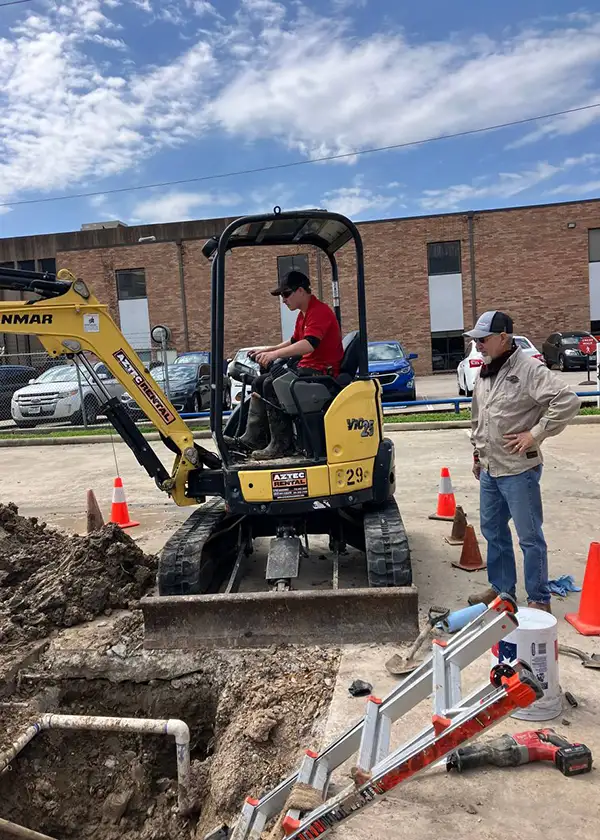 Septic tanks offer a cost-effective and environmentally friendly alternative to traditional sewer systems. Ideal for homes in rural or suburban areas, septic systems effectively treat wastewater on-site.
Santhoff Plumbing is your trusted partner for your new septic system installation. Our experts will help you select the right system for your property and can provide ongoing care to prevent issues.
How Do Septic Systems Work?
A septic system is an underground tank with two compartments. Wastewater is broken down in the first compartment through a bacterial process. The second compartment holds treated water for safe release into the ground.
Regular pumping is essential to maintain a healthy septic system. The tank is pumped periodically to remove any solids from the bottom and sludge that’s built up on the inside walls of the tank.
How Often to Pump Your Septic Tank
Generally, septic tanks should be pumped every 2-5 years. Neglecting pumping can lead to serious issues like backups and drain field failures.
Determining the exact pumping schedule for your septic tank depends on several factors, including:
- Tank size: Larger tanks can hold more solids before requiring pumping.
- Household size: More people generate more wastewater, necessitating more frequent pumping.
- Wastewater volume: Factors like garbage disposals and dishwashers can increase solids buildup inside your tank.
- Soil conditions: Soil type affects how quickly wastewater is absorbed.
Houston Plumbing Company for Expert Septic System Installation
Santhoff Plumbing offers professional and experienced septic system installation and maintenance in Houston. Our team will ensure your system operates efficiently and reliably. Contact us today for a free estimate!