

Quick Answer: Cast iron drain pipes last about 50–75 years. Most Heights and Montrose homes built before 1975 are now at or past that limit. Repipe when you see recurring backups, sewer-gas odors, or a camera shows scale and channeling. Spot fixes on failing cast iron rarely pay off.
Why This Matters in the Heights and Montrose
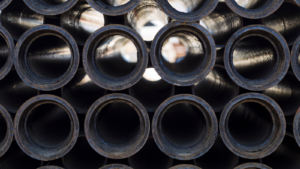 The character that makes the Heights and Montrose two of Houston’s most beloved neighborhoods (the 1910s bungalows, the 1920s craftsman cottages, the post-war brick homes) comes with plumbing born in the same era. Behind those gorgeous facades and original hardwoods sits cast iron drain pipe that has been quietly corroding for the better part of a century.
Cast iron was an excellent material. It is also a material with a shelf life, and in homes built before the mid-1970s, that clock has run out or is about to. The reason this matters now: thousands of these homes are being renovated. Pouring money into new floors, bathrooms, and kitchens on top of dying drain lines is the most expensive sequence a Heights or Montrose homeowner can choose.
How Cast Iron Actually Fails
Cast iron does not rust away evenly. It fails from the inside out, in patterns a homeowner never sees until something backs up:
- Channeling. Decades of wastewater erode a trough along the bottom of horizontal pipe. The top still looks solid; the bottom is gone, and flow slows to a crawl.
- Tuberculation and scale. Corrosion builds rough nodules and mineral scale inside the pipe, shrinking a 4-inch line to the effective diameter of a garden hose and catching everything that passes.
- Bellies. As Houston’s shifting soil settles beneath an old line, sections sag and pool waste, accelerating corrosion exactly where it is hardest to reach.
- Cracks and breaks. Thinned pipe finally splits, leaking sewage into the soil under your slab or crawlspace.
The Signs It Is Time to Repipe
- Drains throughout the house slow down, not just one fixture
- Repeated backups, especially after you snake them and they return within months
- Sewer-gas odor indoors or in the yard
- Gurgling toilets or drains when another fixture runs
- Patches of unusually green or sunken ground over the sewer path
- A camera inspection showing channeling, heavy scale, or standing water in the line
A familiar Montrose example: a 1924 bungalow where the kitchen and laundry “just back up sometimes.” A camera shows the main is 60% scaled and channeled along a 30-foot run. Snaking buys a few weeks each time. The pipe is not clogged; it is worn out.
Common Mistakes and Real Risks
- Snaking on repeat. Cabling a channeled pipe clears the blockage but can crack already-thin iron. Paying for the same clearing three times a year is money toward a repipe with nothing to show for it.
- Renovating over bad pipe. Tiling a new bathroom on top of a failing line means jackhammering that new floor when the pipe gives out. Sequence matters: pipes first, finishes second.
- Partial replacement. Replacing only the section that failed leaves the rest of a same-age system to fail next, often right where it meets the new pipe.
- Ignoring the smell. Sewer gas indoors is not just unpleasant; it signals an open breach in the drain or vent system that is venting into living space.
Cast Iron vs. PVC vs. PEX: What Replaces What
A repipe is not one material. Understanding the split prevents confusion when you get a quote.
- Cast iron (old): the original drain/waste/vent material in these homes. Quiet and durable, but finite.
- PVC or ABS (modern drains): the standard replacement for failed cast iron drain lines, corrosion-proof, smooth-walled, and far lighter to route through an old home.
- PEX or copper (supply): if your supply lines are also original galvanized steel, they are corroding too. PEX is the common modern upgrade for water lines and is often done in the same project.
So “repiping” a Heights home can mean drains, supply, or both; a camera inspection and a look at your water pressure tell us which.
Spot Repair vs. Full Repipe: When to Choose Each
- Spot repair / reline. When to use it: a single, isolated break in an otherwise sound line, or a home you are about to sell. When not to: a system that is uniformly old and showing scale everywhere; you will chase failures indefinitely.
- Full repipe. When to use it: recurring backups, documented channeling, a remodel in progress, or any home you intend to keep more than a few years. A complete whole-home repipe resets the clock for generations.
What happens if it is done wrong: a homeowner who repipes only the “bad” 10 feet of a 70-year-old main often calls back within two years (now with finished floors to protect) when the next segment fails. The savings evaporate.
The Tree-Root Factor in Mature Neighborhoods
There is a second culprit unique to streets like Harvard, Heights Boulevard, and the oak-lined blocks of Montrose: mature trees. The same canopy that makes these neighborhoods beautiful sends aggressive roots toward the one reliable water source in a dry Houston summer: the moisture seeping from joints in old cast iron and clay sewer pipe.
Roots do not break into a healthy, sealed pipe. They exploit the hairline gaps that age and soil movement have already opened. Once inside, they fan out into a mat that snags grease and waste, and they keep growing, widening the crack and collapsing the pipe from the outside in, even as corrosion eats it from within.
This is why a Heights homeowner can have a line cleared of roots in spring and watch it back up again by fall. The roots return because the breach that let them in is still there. On a pipe already thinned by 70 years of channeling, root intrusion is often the final blow that turns “manageable” into “replace it now.”
It is also why a camera inspection matters so much here: it reveals not just the condition of the pipe, but whether roots have found a way in, the difference between a line that can wait and one that cannot.
Repiping an Older Home the Right Way
These homes deserve more care than a tract house. The right process starts with a camera inspection to map the system and confirm what is actually failing, paired with leak detection if breaks are suspected. From there, the work may involve targeted sewer line repair or a full sewer line replacement, routed to disturb original floors and structure as little as possible. Between projects, professional drain cleaning keeps a system functional, but it is maintenance, not a substitute for replacing worn-out iron. If you are weighing who should touch a historic home, our guide to the best plumbers near River Oaks and the Heights is a useful starting point.
Why Choose Santhoff Plumbing
Houston homeowners have trusted Santhoff Plumbing with problems exactly like this for decades. Here is what that means for you.
- Experience since 1974. More than 50 years in Houston and over 200 years of combined crew experience, we have seen how this city’s soil, water, and storms wear on a plumbing system, and we fix the cause, not just the symptom.
- Reliability you can call at 2 a.m. We are a Veteran-owned, family-operated company with a 4.9-star rating across 840+ Google reviews, upfront pricing, and a 24/7 emergency plumber on standby every day of the year.
- Quality and technology. Licensed Master Plumbers using camera inspections, electronic leak detection, and modern materials, backed by a satisfaction guarantee and warranties through our Santhoff Family Club.
- Service area and coverage. We cover Greater Houston end to end: the Heights, Montrose, River Oaks, West University, Bellaire, Memorial, Katy, and beyond. See the full areas we serve.
Call (713) 665-4997 or contact us online to schedule service. Financing is available on qualifying work.
Frequently Asked Questions
How long do cast iron pipes last in Houston?
Generally 50–75 years, but Houston’s humidity and shifting clay soil push many systems toward the shorter end. If your Heights or Montrose home predates 1975 and has its original drains, assume the pipe is at the end of its design life and have it inspected.
Can I just replace the pipes that are leaking?
You can, but on a uniformly aged system it is usually false economy. The sections you do not replace are the same age and will fail next, often at the joint with your new pipe. For older homes showing scale throughout, a full repipe almost always costs less over time.
Will a repipe destroy my original floors or walls?
Not when it is planned carefully. An experienced crew maps the system with a camera first and chooses routes (under the house, through closets, or via targeted access) that protect original hardwoods and plaster. Preserving the character of these homes is part of doing the job right.
Should I repipe before or after renovating?
Before, always. Replacing drains and supply lines after new tile, cabinets, and flooring are in means tearing out finishes you just paid for. If a remodel is on your calendar, address the pipes in the same planning stage.